



Brazil’s electricity system has long been a global benchmark for clean energy leadership. Built upon hydropower and strengthened by renewables, it enabled the country to combine economic growth with one of the world’s lowest-carbon power matrices. Yet the next phase of the energy transition will require greater resilience, flexibility, and geographic balance.
This time series study highlights why Brazil needs offshore wind and why the technology is so strategically useful for the country’s future energy system. Offshore wind can strengthen the Brazilian matrix through three critical pillars:
- Diversifying the energy mix
- Hedging against increasing hydro-climate risks
- Ensuring the long-term expansion of a clean and reliable electricity system
The report also considers the different uses for offshore wind, depending on Brazil’s diverse geography. Offshore wind can rebalance renewable generation toward the South and Southeast through Power-to-Grid models, reducing transmission congestion while bringing generation closer to major load centres. At the same time, the Northeast emerges as a global powerhouse capable of enabling bold Power-to-X, power shoring, and Power-to-Load strategies linked to new low-carbon industries.
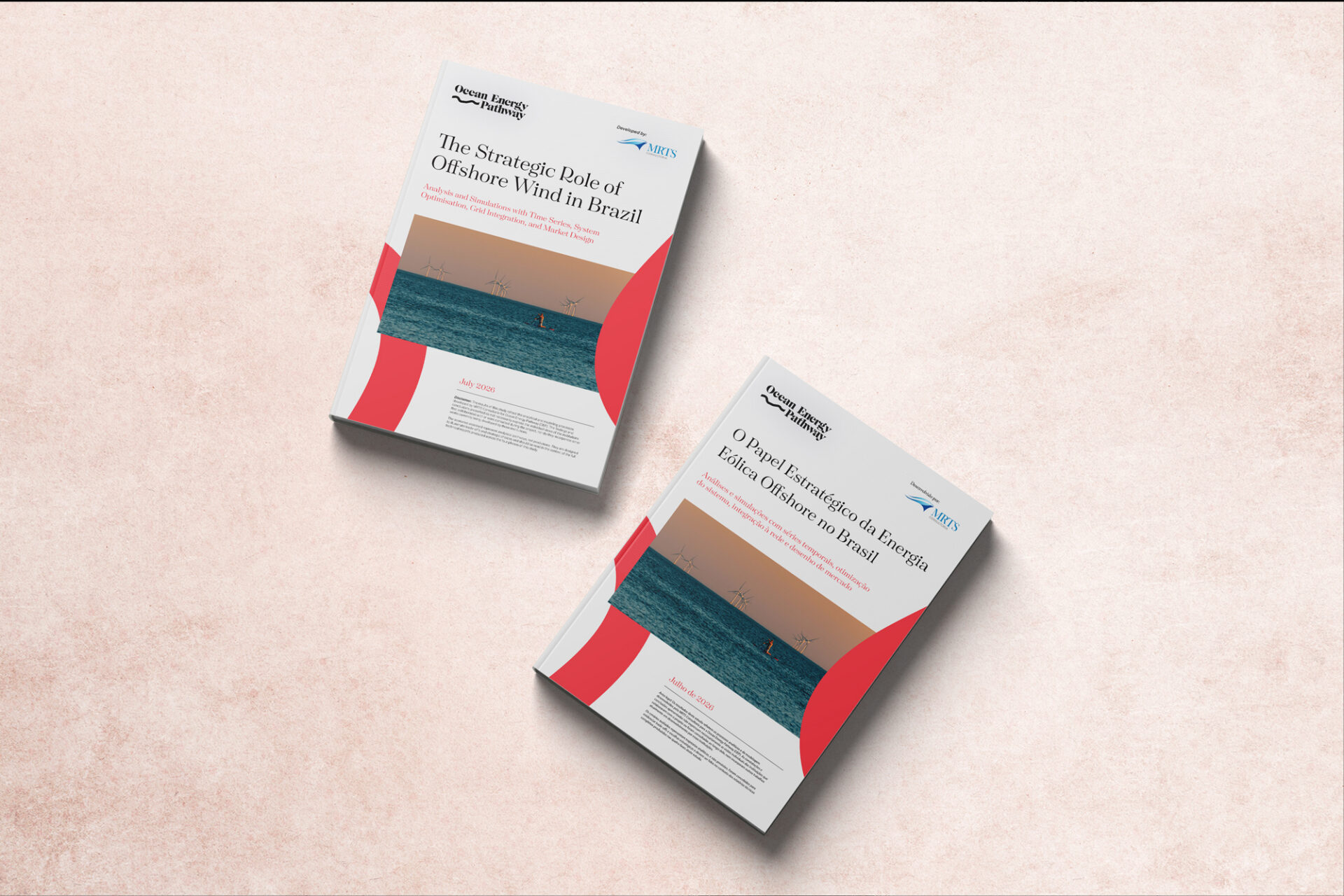
The Strategic Role of Offshore Wind in Brazil
Download PDFAnalysis and Simulations with Time Series, System Optimisation, Grid Integration, and Market Design
O Papel Estratégico da Energia Eólica Offshore no Brasil
Download PDFAnálise e simulações com séries temporais, otimização de sistemas, integração à rede e estrutura de mercado
Please note: technical details on the modelling and analysis which informed the report can be found in this presentation.
Among the study’s most significant findings:
- Introducing 18 GW of offshore wind would increase the total system expansion cost by only 1.3%, while simultaneously reducing investments in long-distance transmission;
- Under scenarios of climate stress and lower hydropower availability, 34 GW of offshore wind would help preserve reservoir levels and contain the surge in operational costs;
- Offshore generation shows hourly complementarity with solar power, increasing output precisely in the late afternoon when photovoltaic generation declines and demand rises — a phenomenon known as the “duck curve”;
- The study points to consistent growth in the need for battery energy storage systems (BESS) in scenarios with offshore wind, reinforcing the role of storage in Brazil’s future power system.
The study reinforces that offshore wind is no longer a long-term possibility for Brazil, but an emerging strategic decision about the country’s future resilience, competitiveness, and the geography of the national energy system.
Julia Paletta, County Head, Brazil, Ocean Energy Pathway