



The Philippines is home to critical habitats for migratory shorebirds, thanks to its position along the East Australasian Flyway. As the country looks to deploy offshore wind in its territorial waters, it’s essential that the impact of these developments are minimised to avoid potential bird collisions with turbines and power lines, habitat loss or barrier effects during migration.
The Offshore Wind Roadmap for the Philippines envisages that up to 40 GW will be delivered by 2040. The Roadmap also highlighted migratory shorebirds, and the legally protected and internationally recognised areas that support them, as Priority Biodiversity Values (PBVs) to which offshore wind farms may pose a particular risk.
To address knowledge gaps and inform sustainable offshore wind planning, we worked with the Biodiversity Consultancy to develop a set of best practices for shorebird tagging studies. The aim of this report is to provide recommendations for standardising
tagging methodologies in the Philippines.
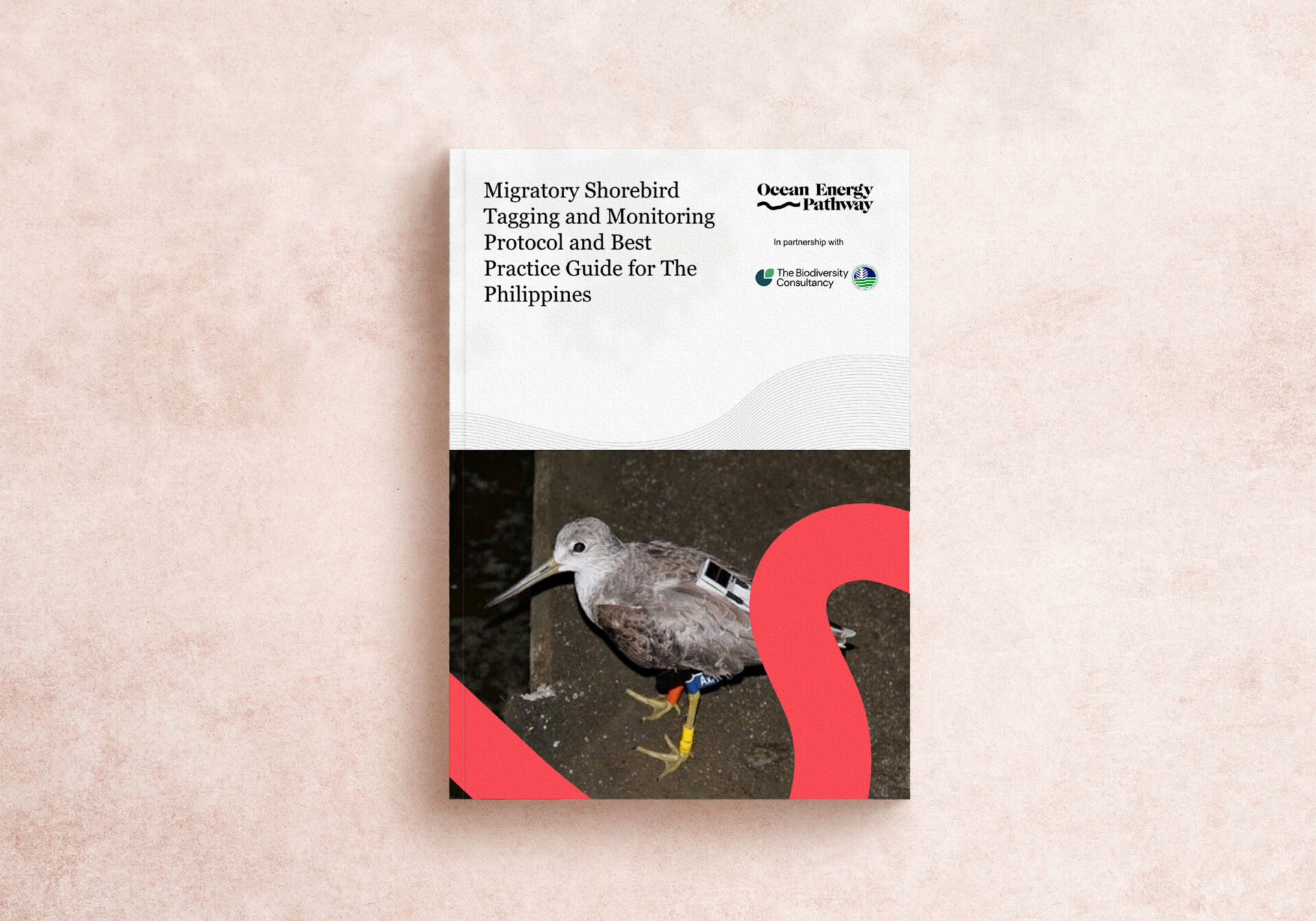
Migratory Shorebird Tagging and Monitoring Protocol and Best Practice Guide for The Philippines
Download PDFThis report puts forward a set of standardised protocols for future shorebird tagging studies in the Philippines to ensure offshore wind developments don’t impact the country’s critical role in the East Australasian Flyway.
The Philippines has incredible biodiversity and its position in the East Asian-Australasia Flyway makes the islands a key stop over for migratory birds. As offshore wind expands in new geographies, it’s imperative that projects are sited according to the best available data to reduce impacts on migratory birds.
Nick Piludu, Senior Programme Manager, Nature & Oceans, OEP
Recommendations
- Research questions for tagging studies in the Philippines should be clearly defined and co-developed with funders and other key stakeholders (e.g., DENR Biodiversity Management Bureau, Department of Energy, NGOs) to ensure clear expectations are set, and to foster collaboration.
- Planning for tagging studies should begin at least six months, and ideally 12 months prior to any fieldwork taking place to ensure sufficient time to secure all necessary permits and order tags.
- The specialised skills required for safely capturing birds and deploying tags means that, in the short-medium term, these studies will require the involvement of international experts. As a priority, all tagging studies in the Philippines should include requirements for the training of national researchers to increase capacity in the country and reduce reliance on international experts.
- To maximise the value of any studies and data collected, projects should seek to engage with the flyway partnership for collaboration and technical support.
- All tagged birds should also be colour-marked following EAAF protocol (Black over Blue for the Philippines).
The Department affirms that this report…will be actively utilised to inform policies, guide future research and monitoring efforts, and strengthen coordination across agencies and stakeholders.
Analiza Rebuelta-Teh
Undersecretary for Finance, Information Systems, and Climate Change
Department of Environment and Natural Resources