


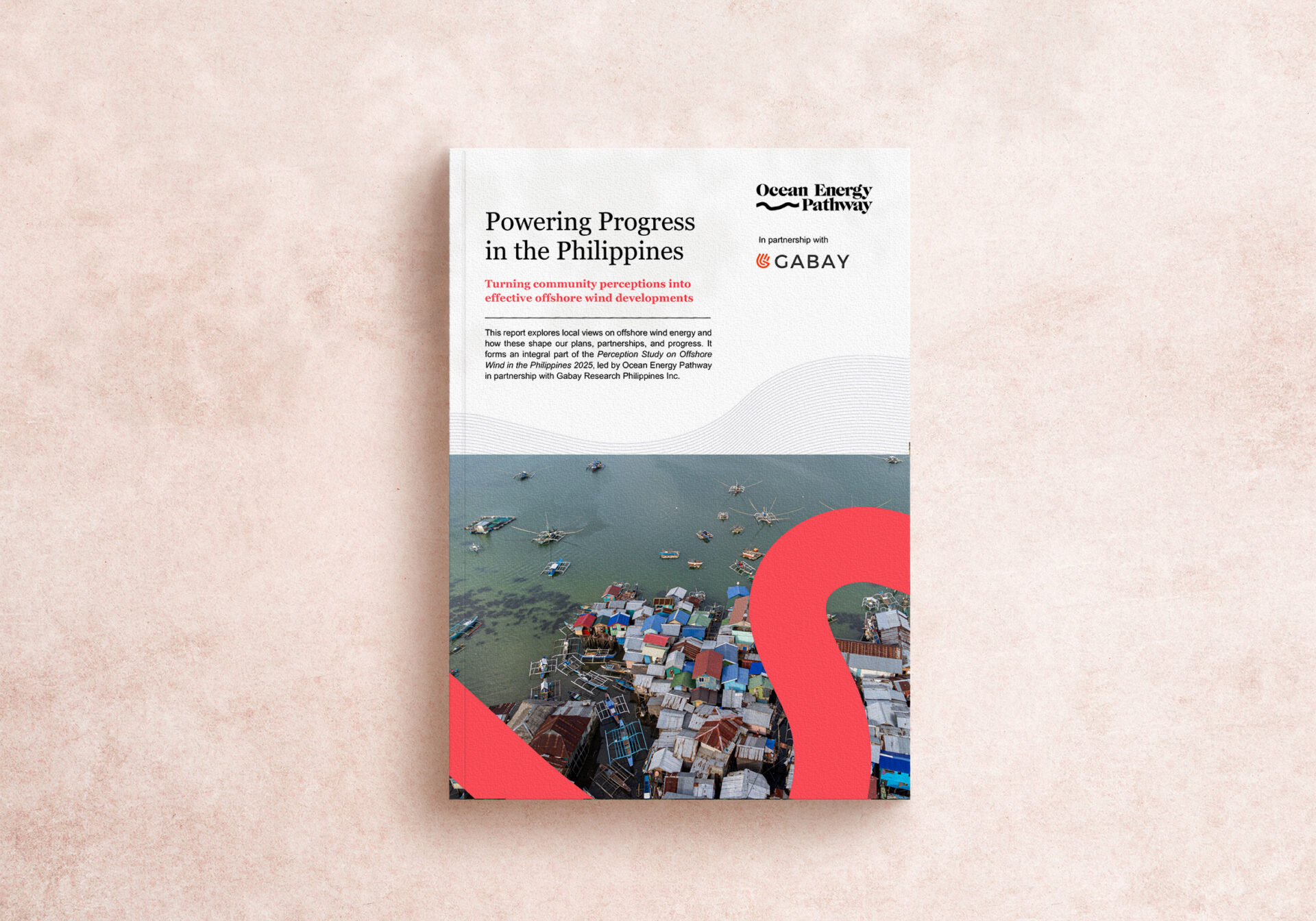

Effective community engagement begins with a clear understanding of how communities perceive development initiatives. In our latest report on the Philippines, OEP and Gabay Research explore local views on offshore wind energy. The study offers valuable insights for the government agencies, project developers, and partner organisations working to accelerate offshore wind deployment in the Philippines, particularly for those designing approaches that respond to community needs.
In the Philippine offshore wind sector, community support plays a critical role in navigating regulatory processes, particularly licensing and permitting. Engagement efforts must be inclusive, reach a diverse range of stakeholders such as coastal communities, fisherfolk, environmental organisations, and Local Government Units (LGUs), and ensure that their perspectives are reflected in project development.
Well-informed and meaningfully engaged communities are more likely to support projects and contribute to securing local support and social license.
Rizaller Amolo, Country Head, Philippines, Ocean Energy Pathway
Powering Progress in the Philippines: Turning community perceptions into effective offshore wind developments
Download PDFThis report explores local views on offshore wind energy and how these shape our plans, partnerships, and progress. It forms an integral part of the Perception Study on Offshore Wind in the Philippines 2025, led by Ocean Energy Pathway in partnership with Gabay Research Philippines Inc.
Recommendations on community engagement to advance offshore wind include:
- Build trust even before project-specific engagement begins.
- Start at the barangay level and treat communities as active partners.
- Close information gaps with full, practical project details.
- Create simple, two-way communication channels.
- Make safeguards credible: livelihoods and environment.
- Use the channels people already trust.
The report recommends effective engagement where host communities play a role as active partners, rather than mere beneficiaries of livelihood compensation packages. Limited awareness, information asymmetry, and past experiences of exclusion have shaped the attitudes within communities in response to offshore wind proposals. Addressing these early is essential to reducing risk and aligning national goals with community expectations.