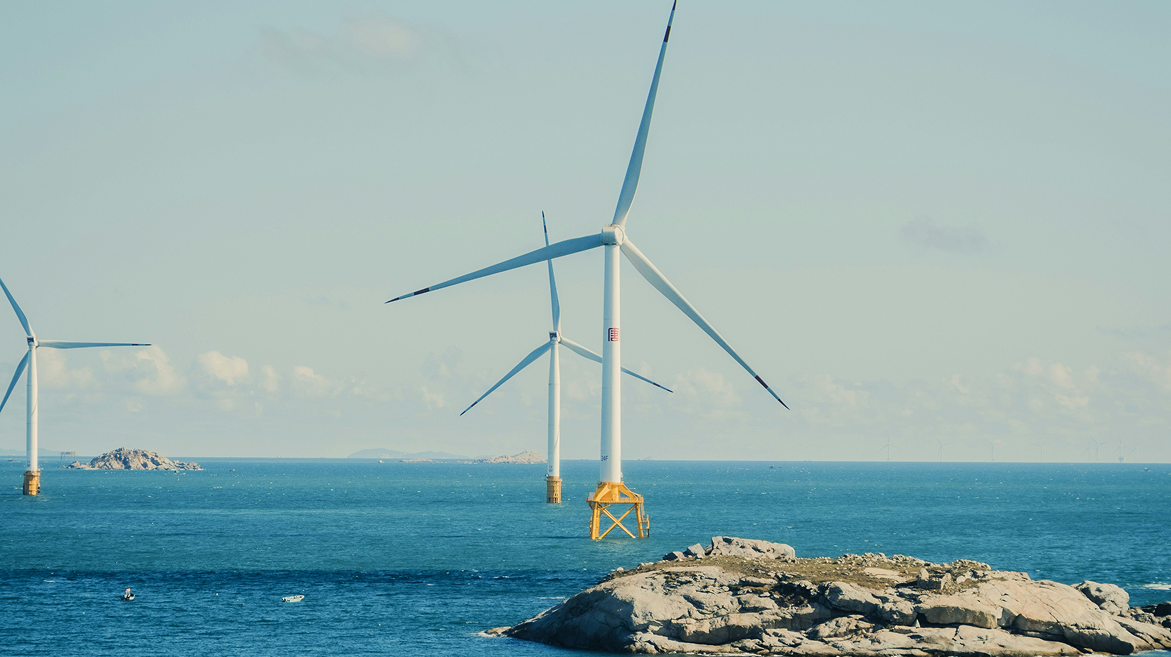
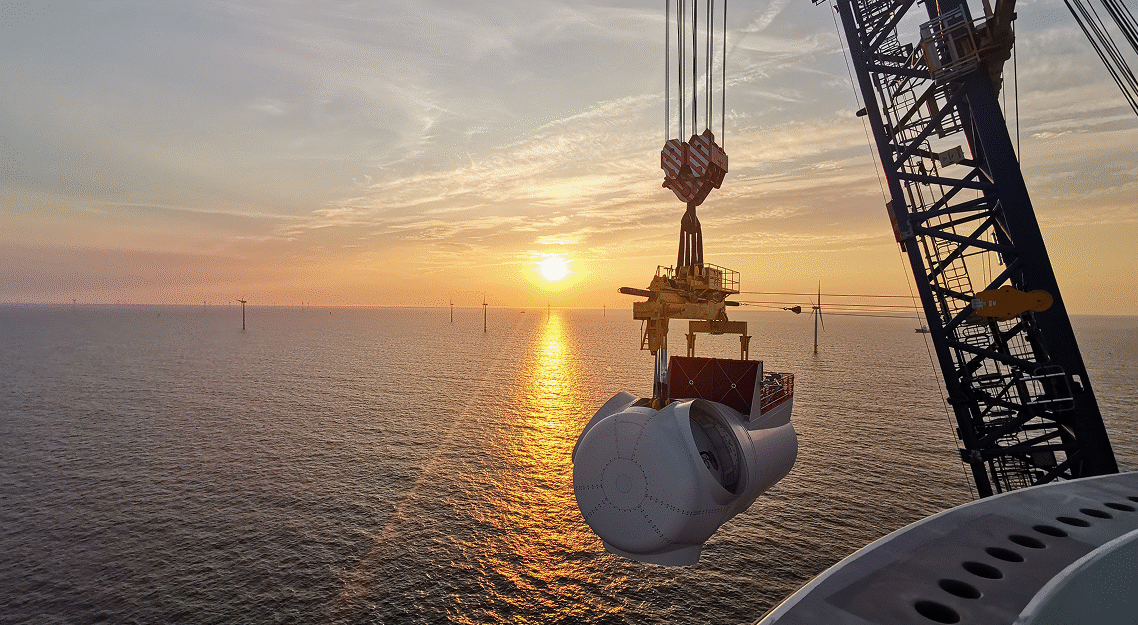
Offshore wind refers to the generation of clean, renewable electricity from wind turbines located out at sea. Winds at sea are stronger and steadier than winds on land, making offshore wind turbines more efficient than land based (onshore) turbines. Owing to there being less limits on space offshore, wind turbines can be bigger and more numerous, capturing larger areas of wind and creating more clean electricity.
Wind
Different types of offshore wind
Currently there are two different types of structures that support offshore wind.
FIXED
Fixed bottom is when turbines are mounted on structures that are anchored directly to the seabed. These structures are ideal for shallow waters (up to 60 meters deep). This is the most common type of offshore wind structure globally.
FLOATING
Floating turbines are installed on floating platforms that are tethered with lines and anchors down to the sea floor. These structures are ideal for deeper waters (60-1,000+ meters deep), opening up significantly larger areas for offshore wind development. Currently there are no mass floating offshore wind turbines installed as the technology is still emerging, however this is rapidly advancing with several countries like Japan and Scotland looking to pioneer the technology.
Why is offshore wind needed?
GROWTH
Industrial & economic growth – offshore wind development, with a strong domestic supply chain, can provide thousands of well-paying jobs, both directly involved in the construction of offshore wind, but also in supply chain industries like steel and electronics manufacturing, as well as port and office workers.
SECURITY
Energy security – offshore wind can diversify a country’s energy mix by producing home-grown electricity that doesn’t rely on imported fossil fuels or global energy market prices.
CLIMATE
Decarbonisation & climate goals – as a clean, renewable energy source, offshore wind can help a country reach its climate goals by reducing reliance on fossil fuels and increasing the availability of green electricity.
INVESTMENT
Infrastructure investment – offshore wind requires upgrades to everything from grid infrastructure, to strategic port development, new road networks and construction facilities. These developments bring significant investments in infrastructure, providing jobs and financial capital to regions across a country, especially those located near offshore wind sites.